How to Select Thermal Pad Thickness for AI Server Applications
As AI servers continue to handle increasingly demanding workloads, effective thermal management has become essential for maintaining system performance and reliability. GPUs, CPUs, AI accelerators, and power components generate significant heat during operation. Choosing the right thermal pad thickness helps improve heat transfer, reduce thermal resistance, and maintain stable contact between components and heat sinks.
But how do you select the right thermal pad thickness for AI server applications?
1. Understand the Gap Between Components and Heat Sinks
The first step is to measure the actual gap between the heat-generating component and the heat sink or cold plate. This gap may vary depending on component height, PCB layout, assembly tolerances, and mechanical deformation.
A thermal pad that is too thin may not fill the gap completely, resulting in air pockets and poor thermal contact. A pad that is too thick may require excessive compression force, potentially placing unwanted stress on sensitive electronic components.
For AI servers with multiple GPUs or high-power processors, accurate gap measurement is particularly important for consistent thermal performance.
2. Consider Thermal Conductivity and Compression
Thermal pad thickness should not be selected based on thermal conductivity alone. The material's compressibility, hardness, and thermal resistance are also important.
A softer thermal pad can conform to uneven surfaces with lower pressure, while a pad with excessive hardness may require greater assembly force. Selecting a material with suitable compression characteristics helps establish reliable contact without damaging components.
In general, a thinner thermal pad may offer lower thermal resistance when other properties remain comparable. However, the best choice depends on the actual gap, contact pressure, surface conditions, and operating requirements.

3. Match Thickness to AI Server Components
Different AI server components require different thermal interface solutions.
- GPUs and AI accelerators: Select thickness based on package height, heat sink design, and assembly tolerances.
- CPUs and power modules: Evaluate the interface gap and required thermal resistance under operating conditions.
- Memory modules and surrounding components: Consider component height variations and the available mounting pressure.
- VRMs and other power components: Choose a pad that provides reliable contact while accommodating different component heights.
For assemblies with components at different heights, multiple pad thicknesses may be required to achieve consistent thermal contact across the board.
4. Validate Thickness Under Real Operating Conditions
Before finalizing a thermal pad, engineers should evaluate thermal performance under representative workloads and assembly conditions. Key factors include operating temperature, compression ratio, mounting pressure, electrical insulation requirements, and long-term reliability.
Testing different thicknesses can help identify the most suitable balance between heat transfer, mechanical stress, and assembly convenience. For high-performance AI servers, validation under actual system conditions is more reliable than selecting a pad based on thickness or thermal conductivity alone.
5. Choose the Right Thermal Pad with ZIITEK
Selecting the right thermal pad thickness is a balance between gap dimensions, thermal performance, compressibility, and mechanical design. A properly selected thermal interface material helps support efficient heat dissipation and reliable AI server operation.
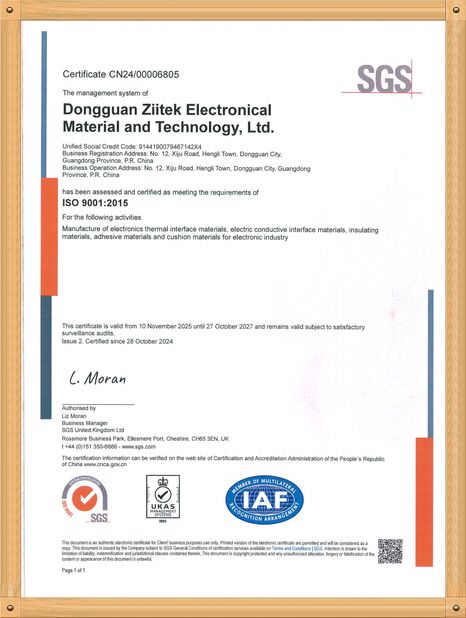
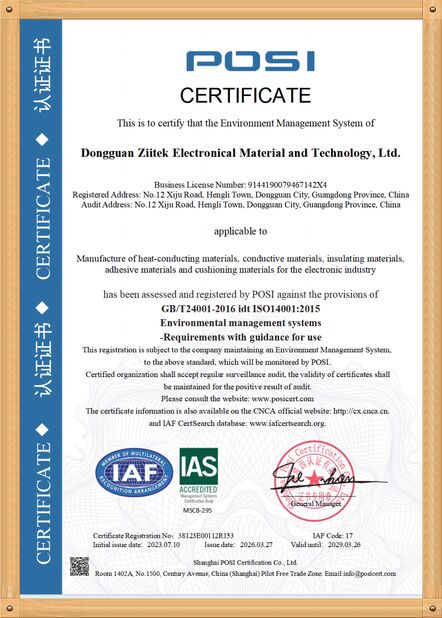
ZIITEK provides thermal management materials for demanding electronic applications, including thermal pads and other thermal interface solutions for GPUs, CPUs, AI accelerators, and data center equipment.
Contact ZIITEK to discuss your application requirements and identify a suitable thermal pad based on your target thickness, thermal conductivity, component gap, and assembly conditions.


 आपका संदेश 20-3,000 अक्षरों के बीच होना चाहिए!
 Hindi
Hindi